

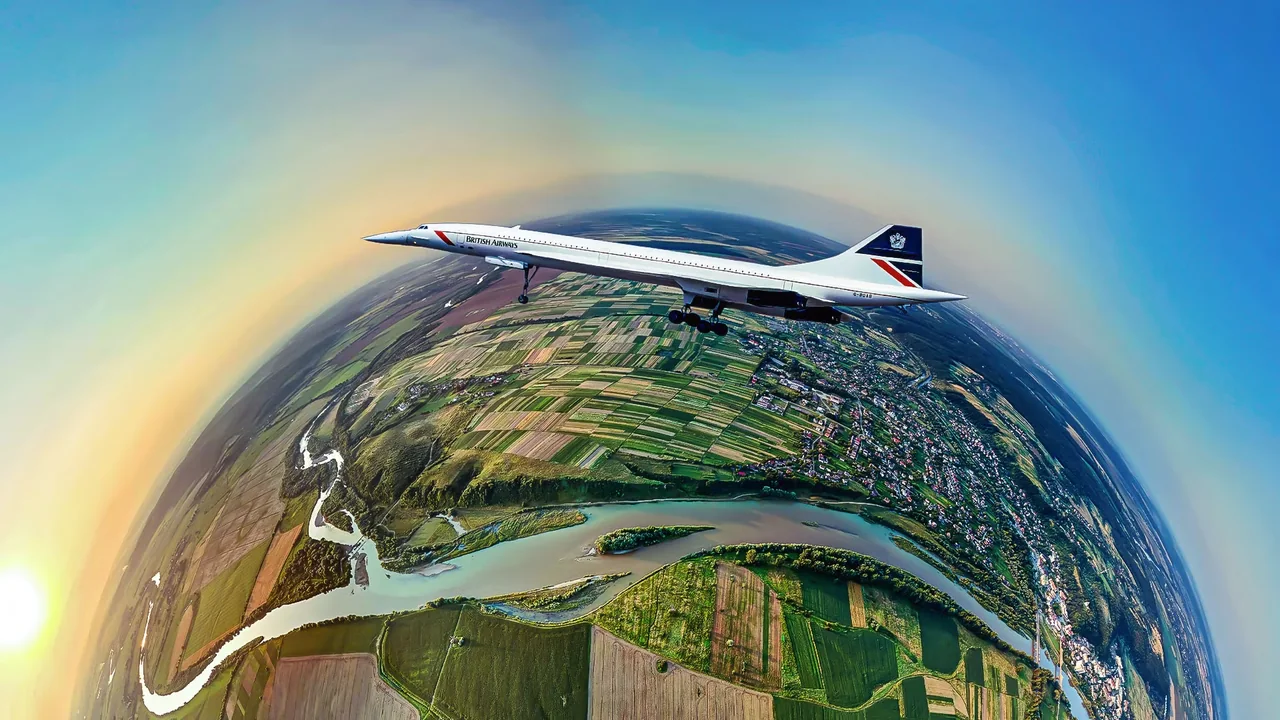
Concorde was a technological marvel that, despite its innovative design, ultimately failed to gain widespread acceptance due to its high operating costs and sonic booms. The plane's combination of British and French engineering expertise paved the way for Airbus, the world's largest commercial aircraft manufacturer.
The Concorde's limited passenger capacity and fuel efficiency issues made it less practical for long-haul flights. Its Rolls-Royce/Snecma Olympus engines consumed a significant amount of fuel, resulting in a maximum distance of 3,900 nm (7,222.8 km) compared to a Boeing 757.
Concorde's supersonic capabilities were overshadowed by its high operating costs and environmental concerns. The plane's sonic booms caused nearly every nation on Earth to ban supersonic flights over land, further limiting its potential for commercial use.

The Concorde's unique partnership between British Airways and Singapore Airlines was a rare example of international cooperation in the aviation industry. However, this arrangement ultimately proved too expensive for Singapore Airlines, which ceased operations with the Concorde in 1980.
Despite its short operational life, the Concorde remains an important part of aviation history. Its legacy can be seen in the development of more efficient and sustainable aircraft designs.
The Concorde's longest flight took nearly four and a half hours to complete, making it one of the most impressive feats of modern aviation engineering. However, this achievement was overshadowed by the plane's high operating costs and environmental concerns.

Concorde's limited passenger capacity was a significant drawback for long-haul flights. The plane could only seat 100 passengers in a four-abreast layout, making it less practical than other commercial aircraft options.
The Concorde's unique livery, featuring both British Airways and Singapore Airlines colors, was a rare example of international branding cooperation in the aviation industry.
The unique partnership between British Airways and Singapore Airlines highlights the challenges of supersonic flight in commercial aviation.