
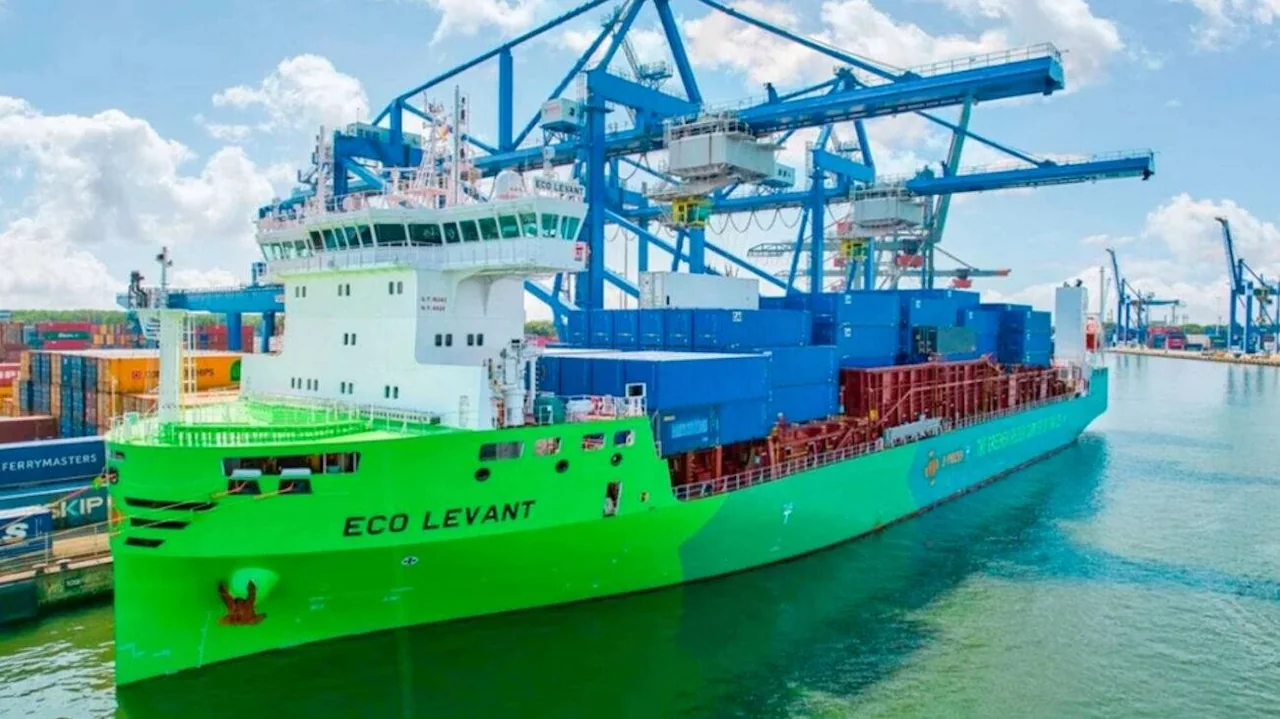
Last weekend, the container ship Eco Levant, operated by X-Press Feeders, made history by becoming the first vessel to be bunkered with ethanol in the port of Rotterdam. This milestone marks one of the first times worldwide that a bunker vessel supplied ethanol to a sea-going vessel, highlighting the growing trend towards sustainable fuels in the maritime industry. The vessel's bunkering was carried out under controlled operational conditions, ensuring the safe and efficient delivery of the fuel blend.
The Eco Levant has been operating on a unique blend of 90% ISCC EU-certified biomethanol and 10% ISCC EU-certified second-generation ethanol since the bunkering. This innovative fuel combination is a significant step towards reducing greenhouse gas emissions from maritime transportation. The fact that both fuels were delivered separately by a single inland bunker vessel and then blended on board the receiving vessel demonstrates the growing efficiency of the industry.
Methanol bunkering is already well established in the maritime sector, but ethanol bunkering represents a new frontier for sustainable fuel solutions. X-Press Feeders' decision to adopt ethanol bunkering reflects the company's commitment to reducing its fleet's emissions and contributing to a more environmentally friendly shipping industry.
The world's largest independent feeder shipping company operates a fleet of over 100 vessels serving more than 180 ports worldwide. X-Press Feeders' focus on sustainable fuels is part of its broader strategy to minimize its environmental impact and reduce operating costs.
Shivendu Gadkar, Head of Fleet Efficiency and Performance at X-Press Feeders, emphasized the importance of continued innovation in reducing maritime emissions. 'Maritime fuels continue to evolve,' he noted. 'At X-Press Feeders, we believe it's essential to evaluate workable solutions and develop them further — solutions that contribute to reducing our fleet's emissions.'
The adoption of ethanol bunkering by X-Press Feeders marks a significant shift towards more sustainable fuel options in the maritime industry. As the shipping sector continues to grapple with the challenges of climate change, innovative solutions like ethanol bunkering will play an increasingly important role.
Ethanol bunkering offers several benefits over traditional methanol bunkering, including improved environmental performance and reduced greenhouse gas emissions. The use of ethanol as a bunker fuel can also help reduce air pollution in ports and surrounding areas.
The Rotterdam port's adoption of ethanol bunkering is a testament to the city's commitment to sustainable transportation and its role as a hub for innovative maritime solutions. As the global shipping industry continues to evolve, Rotterdam is likely to remain at the forefront of this trend.
X-Press Feeders' decision to adopt ethanol bunkering sends a clear message about the company's dedication to reducing its environmental impact. By embracing new technologies and fuel options, the company is helping to drive positive change in the maritime industry.
As the world's largest independent feeder shipping company, X-Press Feeders has a significant influence on the development of sustainable fuels in the maritime sector. Its adoption of ethanol bunkering will likely inspire other companies to follow suit and explore new opportunities for reducing emissions.
Ethanol bunkering marks a significant step towards reducing maritime emissions.