

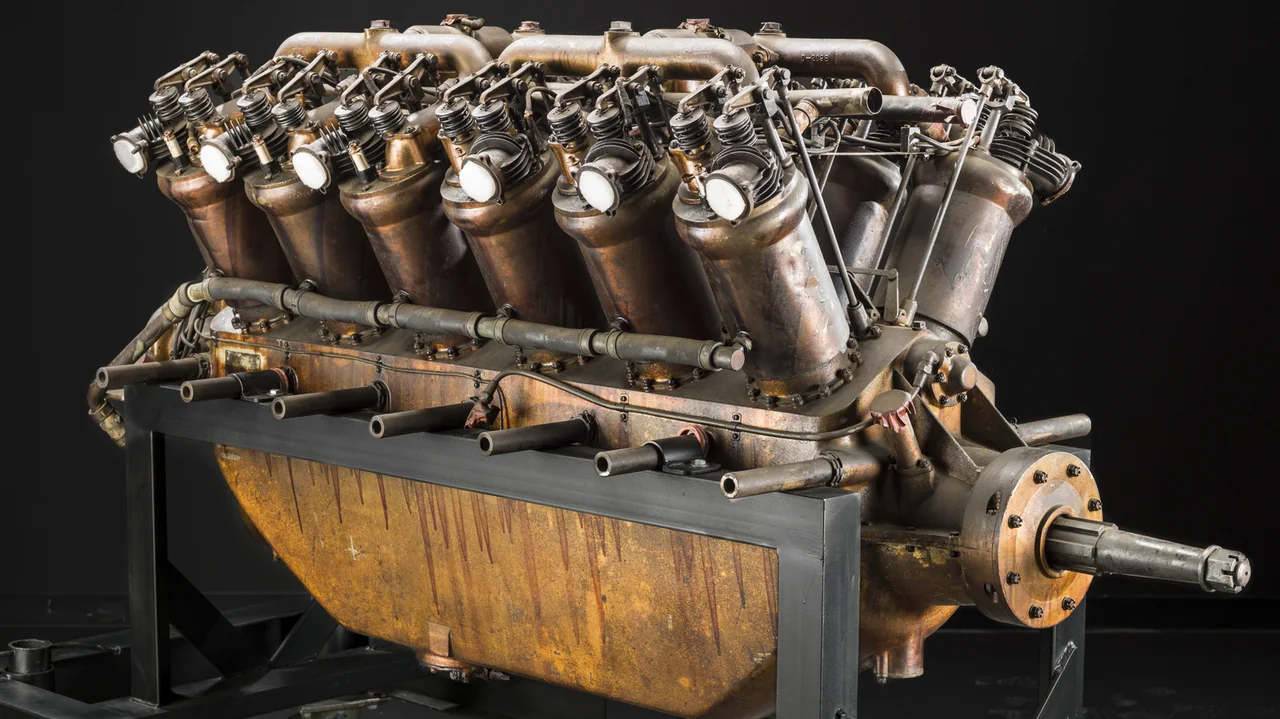
The Liberty V12's creation was a result of necessity, driven by the need for a simple and modular aircraft engine to meet the US war effort's demands.
In 1917, Congress created the Aircraft Production Board, which brought together engineers from various companies to develop an aircraft engine that would be lighter, more powerful, and cheaper to manufacture than existing designs.
The engineering duo of Elbert J. Hall and Jesse G. Vincent were given just a few days at the New Willard hotel in Washington, D.C. to come up with an engine design.
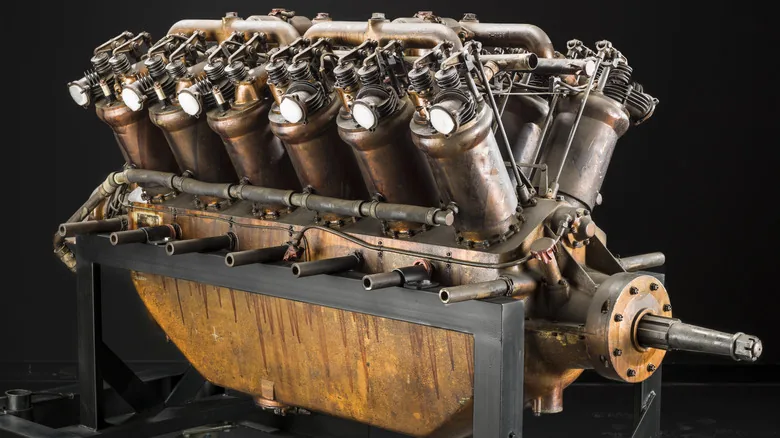
Their original V8 engine was later scaled up to a 12-cylinder configuration due to its superior power output, resulting in the Liberty 12 Model A V12.
The Liberty V12's production played a significant role in supporting the Allied war effort, with over 32,000 units produced during World War I.
The engine's success also had a lasting impact on the automotive industry, helping to form the Lincoln car company.
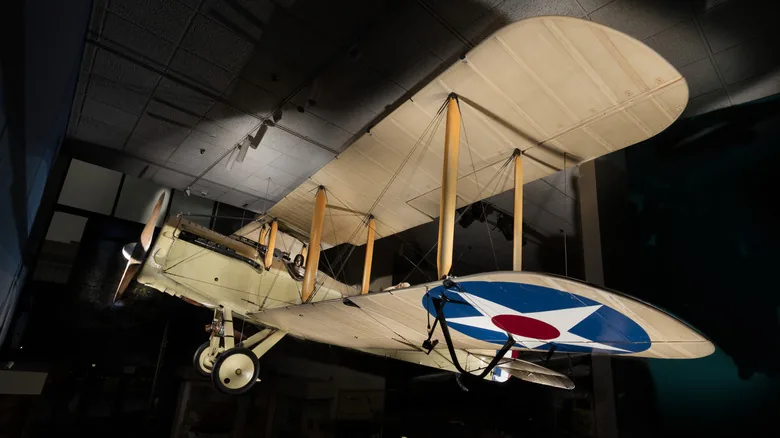
Ford, Packard, and General Motors were among the companies approached to build L-12 engines, but GM initially declined due to its president's refusal to participate in the war effort.
Henry Leland, the founder of Cadillac, eventually joined forces with Ford to produce the Liberty V12 engine.
The Liberty V12's legacy extends beyond its military applications, as it paved the way for modern engine manufacturing techniques and inspired future generations of engineers.
The Liberty V12's innovative design paved the way for modern engine manufacturing techniques.