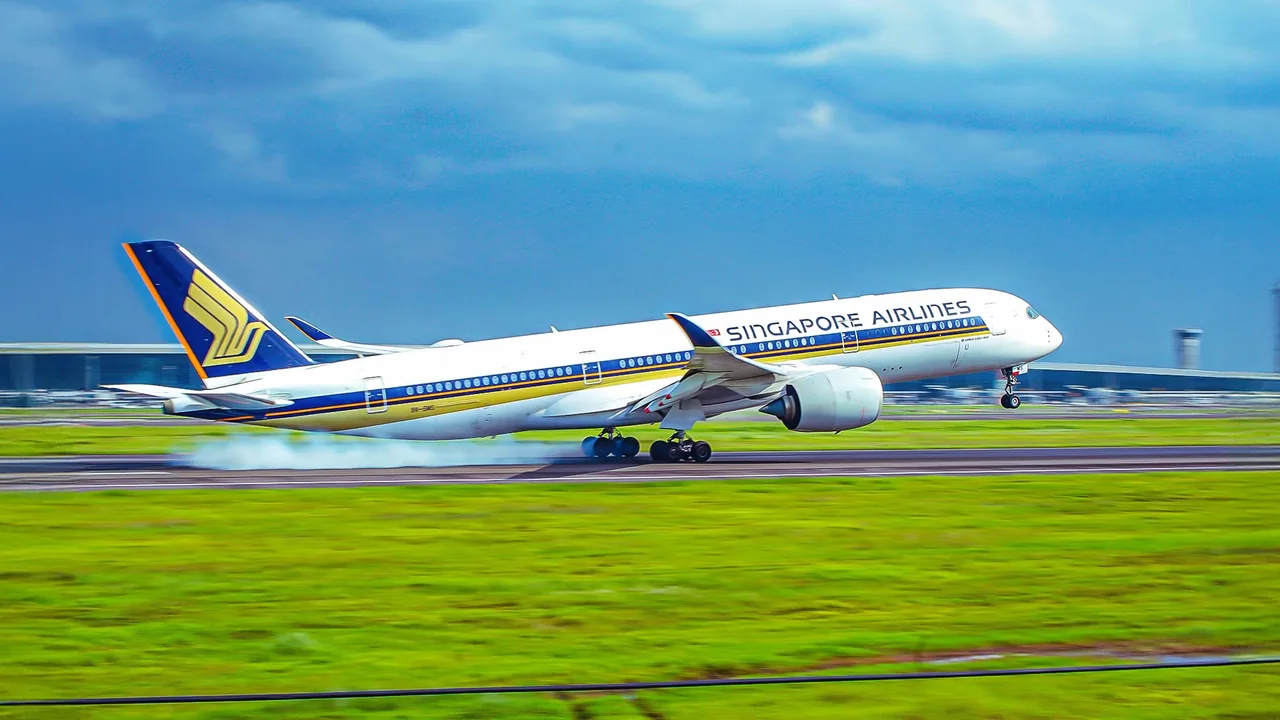
The Airbus A350 continues the trend set by the Boeing 787 in terms of construction, marking a shift away from traditional metallic structures. The aircraft's composite materials are used extensively throughout its design, with large portions of the fuselage, wing structures, empennage, center wing box, and tail cone composed of carbon fiber.
This decision was driven by the advantages offered by composite materials over traditional metallic construction. Composite materials provide an exceptional strength-to-weight ratio, enabling engineers to reduce aircraft weight while maintaining critical structural rigidity. As a result, the A350 offers improved fuel efficiency, range, and payload capacity compared to its predecessors.
The lower weight of the A350 directly translates to significant fuel savings, with the aircraft offering up to 25% lower fuel burn than comparable models. Additionally, the aircraft's composite construction enables it to achieve up to 1,500 NM more range than the A330.

In addition to fuel efficiency gains, composite fiber-reinforced plastic structures are highly resistant to corrosion and fatigue cracking, two major long-term problems that have historically impacted aluminum airframes. This reduction in maintenance needs is a significant benefit for operators and lessors alike.
However, despite these advantages, carbon fiber composites also pose challenges. One of the most significant issues is the difficulty of visually detecting structural damage, particularly Barely Visible Impact Damage (BVID).
BVID occurs when a strong impact with the ground can cause significant internal structural damage without leaving evidence on the surface of the aircraft. This type of damage is difficult to detect and repair, posing significant challenges for maintenance and repair procedures.

The danger posed by BVID is especially significant on larger composite aircraft like the A350 and Boeing 787, which rely on the integrity of layered carbon fiber laminates bonded together during manufacturing. When strong forces are applied to the airplane, like during heavy hailstorms or drought landings, the forces travel through the entire airframe simultaneously.
The use of carbon fiber composites in the A350's construction has significant implications for maintenance and repair procedures. As the aircraft's composite materials become increasingly prevalent, it is essential that manufacturers and operators develop effective methods for detecting and repairing BVID.
The use of carbon fiber composites in the A350's construction has significant implications for maintenance and repair procedures.