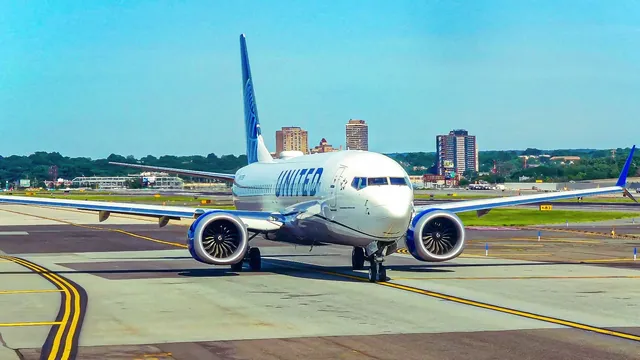

On May 30, a Eurowings flight from Greece to Germany was hit by wake turbulence left behind by an Emirates A380. The Airbus A320 was traveling at an altitude of 36,000 feet when it struck the unexpected turbulence.
The International Civil Aviation Organization (ICAO) outlines that the safe minimum separation between aircraft types and altitudes should be at least seven nautical miles when traveling at the same altitude or within 1,000 feet. However, in this incident, the Eurowings A320 was only separated from the Emirates A380 by around 7.6 nautical miles.
The plane was cleared to climb to 38,000 feet after another flight traveling overhead, that of Emirates EK1 from Dubai International Airport to London Heathrow Airport, was ahead by around 7.6 nautical miles and approximately 13 nautical miles north-east of Sarajevo.

As the Eurowings A320 climbed to 37,600 feet, it struck unexpected turbulence, throwing four passengers and a flight attendant into the ceiling of the narrow-body jet.
The plane immediately descended its altitude to return to 36,000 feet, at a rate of 3,000 fpm. Injured passengers and crew onboard were offered first aid, and the Captain decided that the aircraft could continue to its final destination of Cologne.
For the Eurowings A320, the plane remained on the apron at Cologne for over four hours for inspection, where the cockpit voice recorder and flight data recorder were secured.

The incident is a stark reminder of the potential dangers of wake turbulence, which can be unpredictable and difficult to detect. It also highlights the importance of adherence to safe minimum separations between aircraft types and altitudes.
Following the incident, there was no delay or interruption to the corresponding flights for either Eurowings A320 or Emirates A380.
The investigation into the incident is ongoing, with officials reviewing the flight data and cockpit voice recordings to determine the cause of the wake turbulence.

The incident highlights the importance of adhering to safe minimum separations between aircraft types and altitudes.