

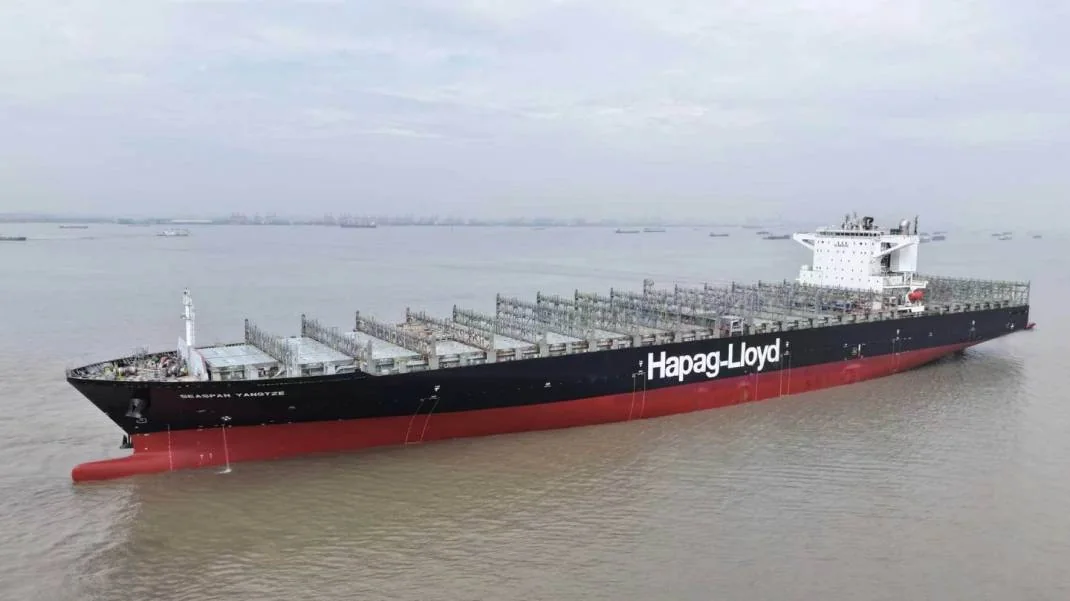
The shipping industry has long been criticized for its environmental impact, with greenhouse gas emissions from vessels contributing significantly to global warming. In an effort to reduce its carbon footprint, Hapag-Lloyd and Seaspan Corporation have collaborated on a joint methanol retrofit program. The first vessel, the Seaspan Yangtze, has now completed its conversion from a conventional engine to a dual-fuel engine capable of operating on methanol.
This milestone marks an important step towards decarbonization in the shipping industry. With the completion of this retrofit, Hapag-Lloyd is taking concrete action towards reducing its carbon emissions and meeting its sustainability targets.
The Seaspan Yangtze's conversion is just one part of a larger program that will see five 10,100 TEU charter vessels retrofitted with dual-fuel engines. The overall investment for the project is estimated at around $120 million, highlighting the significant commitment required to make such changes.
The methanol retrofit program not only reduces CO2e emissions but also extends the operational use of existing vessels and increases fuel flexibility. This approach offers a more sustainable alternative to traditional fuels, reducing dependence on fossil fuels and lowering environmental impact.
By pursuing multiple levers for sustainability, including newbuildings, dual-fuel retrofits, efficiency improvements, and alternative fuel sourcing, Hapag-Lloyd is demonstrating its commitment to reducing its carbon footprint. This approach will be crucial in meeting the shipping industry's ambitious decarbonization targets.
The Seaspan Yangtze's successful conversion demonstrates the potential for technical innovation and close cooperation between partners to make existing vessels ready for low-carbon fuels. As the shipping industry continues to evolve, such collaborations will become increasingly important.
With five vessels set to be retrofitted under this program, the impact of methanol fuel on the shipping industry will be significant. The reduction in CO2e emissions from these conversions will contribute substantially to the overall decrease in carbon emissions from the sector.
The successful completion of the Seaspan Yangtze's conversion marks a major step towards decarbonizing the shipping industry. As the industry continues to transition towards more sustainable practices, vessels like the Seaspan Yangtze will play a crucial role in reducing greenhouse gas emissions.
As the shipping industry moves towards a low-carbon future, innovations like methanol fuel and dual-fuel engines will be critical in achieving this goal. The successful retrofit of the Seaspan Yangtze serves as a model for other vessels and sets a precedent for the industry's transition to more sustainable fuels.
The successful conversion of the Seaspan Yangtze marks a significant step towards decarbonizing the shipping industry.