
Concorde's distinctive profile has become synonymous with supersonic travel, yet the exacting demands of modern air travel have rendered this design obsolete.
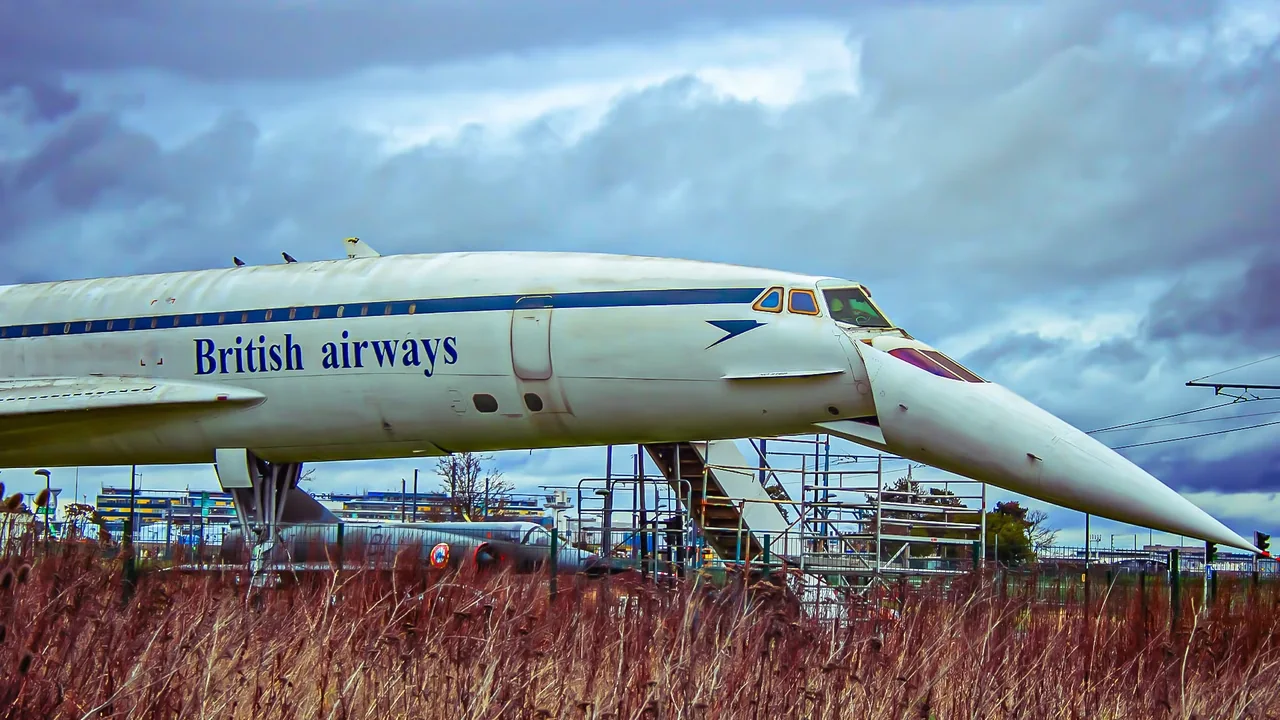
The unique aerodynamic requirements of supersonic flight necessitate a long, pointed nose cone to pierce shockwaves cleanly, but this geometry creates visibility hazards during low-speed phases.
A delta-wing aircraft's inability to utilize traditional flaps or slats for extra lift at lower speeds makes it prone to visibility issues during landing, highlighting the need for an articulating nose assembly.

The Concorde's slender delta wing profile was a pioneering solution to this problem, but its reliance on vortex lift and high nose-up attitude poses significant structural challenges.
Engineers developed an innovative articulating nose assembly hinged directly to the forward pressure bulkhead, allowing it to adjust its geometry depending on flight phase.
This mechanical adaptability was initially praised during testing, but it came at a substantial cost in terms of weight and maintenance requirements.

The Concorde's drooping nose is now viewed as an unnecessary liability by modern aircraft designers, who prioritize efficiency and practicality over aerodynamic flexibility.
The severe weight penalties imposed on operators have made the Concorde's unique design unfeasible for revival in commercial supersonic travel.
Modern technology has rendered a moving nose assembly impractical for commercial jets, highlighting the significant technical hurdles to reviving supersonic travel.

The revival of commercial supersonic travel poses significant challenges to modern aircraft designers, who must balance aerodynamic efficiency with weight and maintenance requirements.
The Concorde's legacy serves as a reminder of the innovative solutions that can be achieved in aviation, but its impracticality highlights the need for new designs that prioritize practicality over historical symbolism.
The Concorde's unique nose assembly was a groundbreaking solution to visibility issues during low-speed flight, but its mechanical complexity has made it obsolete in modern air travel.

Reviving commercial supersonic travel will require significant advances in materials science and aerodynamic design, as well as a reevaluation of the trade-offs between efficiency and practicality.
The Concorde's drooping nose is an iconic symbol of twentieth-century aviation, but its impracticality highlights the need for new designs that prioritize weight, maintenance, and aerodynamic flexibility in modern aircraft.
The revival of supersonic travel will depend on the ability to overcome these technical hurdles and create more practical solutions that balance efficiency with safety and practicality.
Modern aircraft designers must carefully consider the trade-offs between aerodynamic efficiency and practicality when designing new supersonic aircraft, taking into account the lessons learned from the Concorde's unique nose assembly.
The revival of commercial supersonic travel will require a fundamental reevaluation of the design priorities that have driven innovation in aviation for decades.
The Concorde's legacy serves as a reminder of the innovative solutions that can be achieved in aviation, but its impracticality highlights the need for new designs that prioritize practicality over historical symbolism and aerodynamic flexibility.
The Concorde's drooping nose is an iconic symbol of twentieth-century aviation, but its mechanical complexity makes it impractical for modern aircraft.