


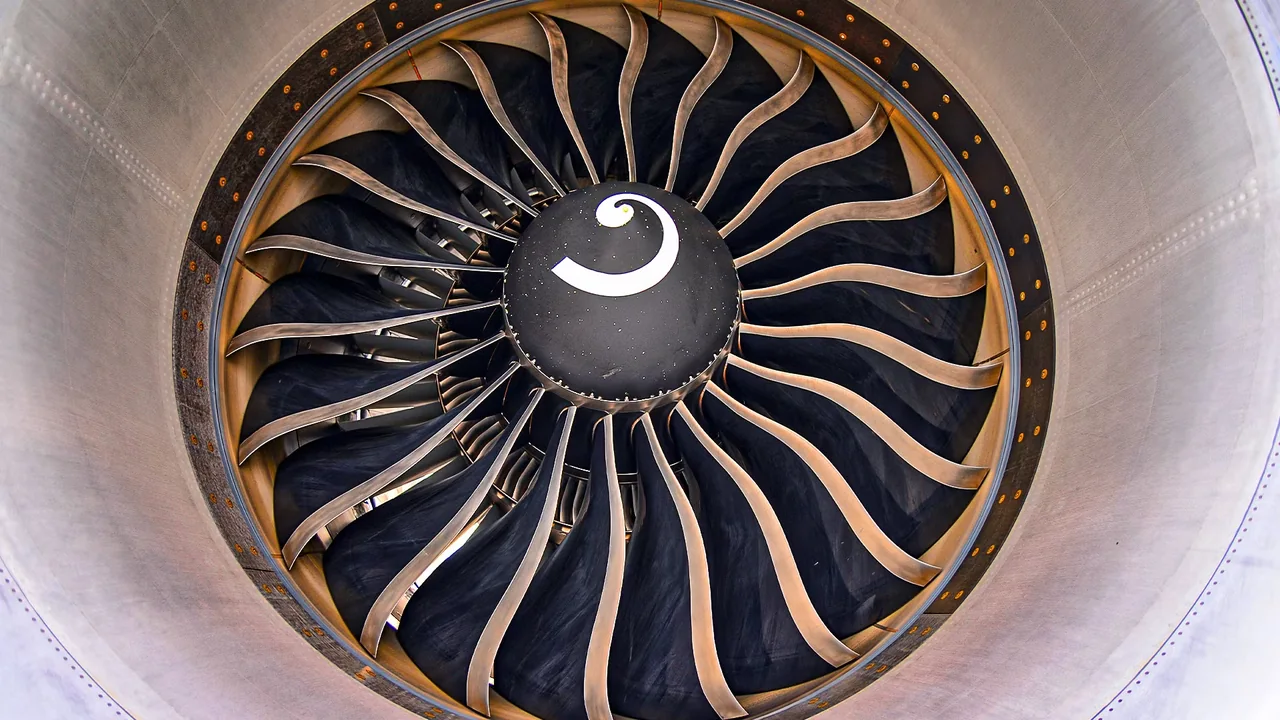
The scale of modern commercial aviation propulsion is best appreciated by standing directly beneath the wing of a premier widebody jetliner. Engine manufacturers have continually pushed the physical boundaries of diameter and bypass ratios to squeeze the maximum efficiency from twin-engine transport designs. The General Electric GE90 and the Rolls-Royce Trent XWB represent two distinct pinnacles of widebody turbofan engineering.
Environmental regulations are tightening, and airlines demand lower operating costs, so the physical width of an engine nacelle now dictates the entire architecture of modern long-haul airframes. While Rolls-Royce optimized its system around a highly specialized, compact multi-shaft configuration, General Electric chose a path of raw volumetric mass flow.
The 10-inch gap between the GE90-115B and Trent XWB is a significant difference that reshapes everything from fuel consumption to airport ground clearance.

This size difference translates directly into record-breaking performance capabilities on the tarmac. During certification testing in 2002, the GE90-115B secured a Guinness World Record by reaching a staggering peak thrust of 127,900 lbf.
For day-to-day airline operations, the engine runs at a more conservative commercial service rating of 115,300 lbf. Meanwhile, the Trent XWB operates with a maximum thrust range stretching from 84,000 to 97,000 lbf.
The immense size of the General Electric engine requires a highly specialized, arched wing placement on the Boeing 777 to maintain adequate ground clearance during landing. In contrast, the Trent XWB is perfectly tailored to hug the sleek profile of the Airbus A350 aircraft.

This design difference highlights the importance of material science breakthroughs and aerodynamic calculations in shaping the performance of modern jet engines.
As airlines continue to push for more efficient and environmentally friendly aircraft designs, the physical size of jet engines will remain a crucial factor in determining their overall efficiency and performance.
The physical size of modern jet engines has a significant impact on their performance and efficiency.