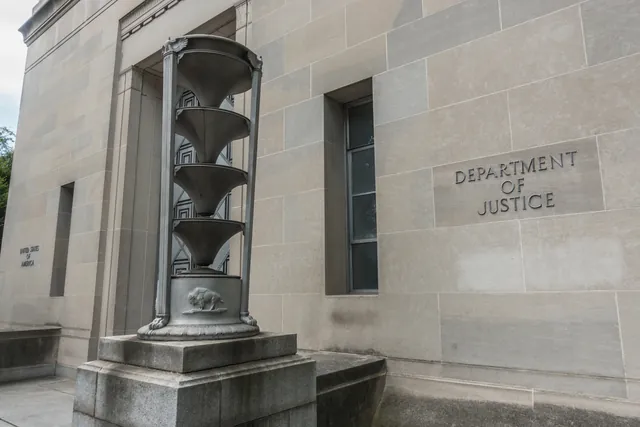

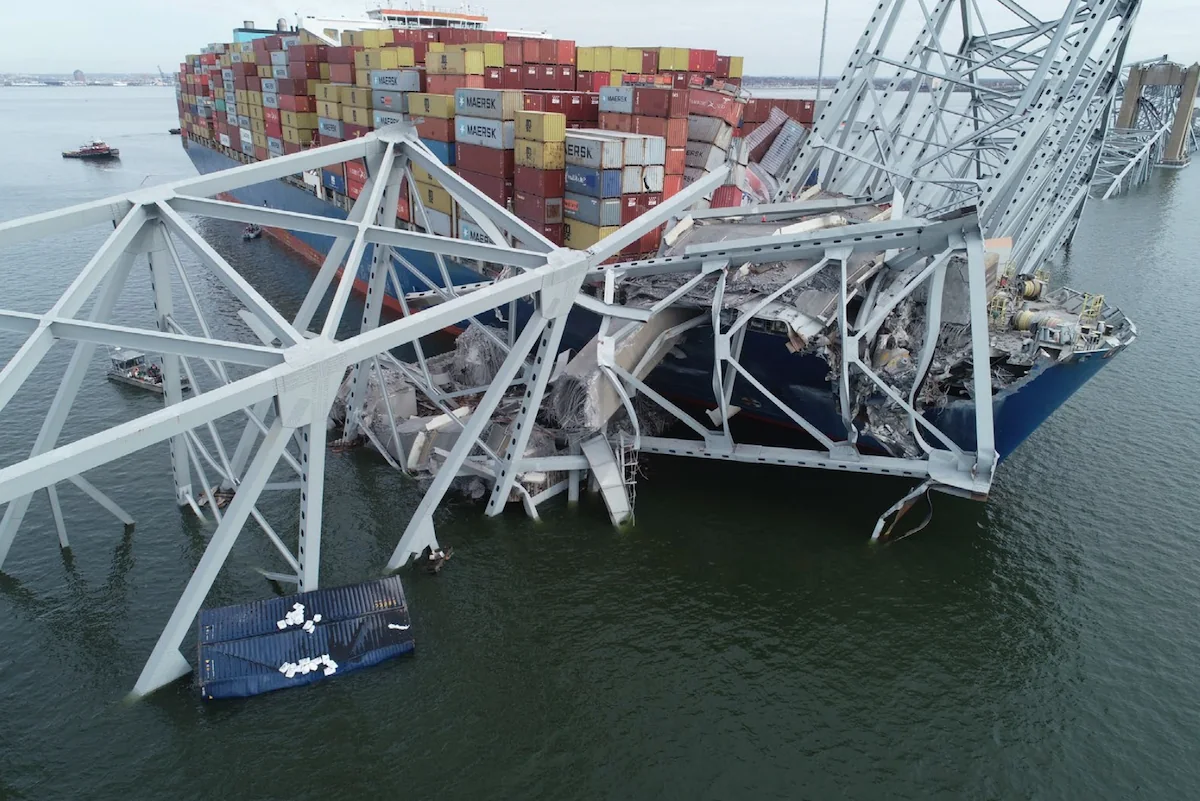
Late Tuesday, the US Department of Justice announced that it has charged a Singapore-based ship operator and its senior employee with crimes related to the fatal 2024 collapse of the Francis Scott Key Bridge in Baltimore. The incident resulted in the deaths of six highway workers on the bridge. The National Transportation Safety Board had previously determined that a loose wire in the ship's control panel was likely responsible for the power failures that led to the disaster.
The Dali, a container ship operated by Synergy Marine Pte Ltd., suffered two separate power failures before leaving the Port of Baltimore bound for Sri Lanka on March 24, 2024. The vessel then crashed into a bridge pier, causing the span to collapse and resulting in the tragic loss of life.
The indictment alleges that the ship's operators deliberately cut corners at the expense of safety, leading to the catastrophic event. This reckless behavior is a stark reminder of the importance of prioritizing maritime safety and adhering to strict regulations.

As outlined in the indictment, the improper fuel pump system left the ship unable to regain power after the initial failure. This lack of urgency and oversight by the ship's operators has severe consequences for the lives lost and the families affected.
The charges brought against Synergy Marine Pte Ltd., its subsidiary Synergy Maritime Pte Ltd., and technical superintendent Radhakrishnan Karthik Nair, 47, an Indian national, include conspiracy, willfully failing to inform the US Coast Guard of a known hazardous condition, obstruction of investigation, and making false statements.
The government has also brought misdemeanor charges against the operators for the hazardous spill into the Patapsco River. This incident highlights the need for stringent safety measures and effective communication between ship operators and regulatory bodies.
In addition to the criminal charges, the state of Maryland has finalized a settlement worth $2.25 billion with the Dali's owner and Synergy Marine Pte Ltd., covering claims related to the bridge collapse.
The case serves as a wake-up call for the maritime industry, emphasizing the importance of prioritizing safety, adhering to regulations, and taking responsibility for one's actions.
As the industry continues to evolve, it is crucial that ship operators, regulatory bodies, and stakeholders work together to prevent similar tragedies in the future.