

South Korea has taken a crucial step in its ambitious plan to expand its role in Arctic shipping by selecting Panstar Line as the operator for its first trial container voyage along Russia's Northern Sea Route (NSR). The country aims to develop alternative trade corridors between Asia and Europe, reducing dependence on traditional routes. By leveraging the NSR, South Korea seeks to tap into new markets and increase its influence in the region.
The selection of Panstar Line follows a public tender issued by the Korea Ocean Business Corporation (KOBC) and the Korea Shipping Association (KSA), which sought an operator for a 3,000 twenty-foot equivalent unit (TEU) Arctic test voyage. The company's container services already connect South Korea, Japan, and China, making it well-positioned to handle this new challenge.
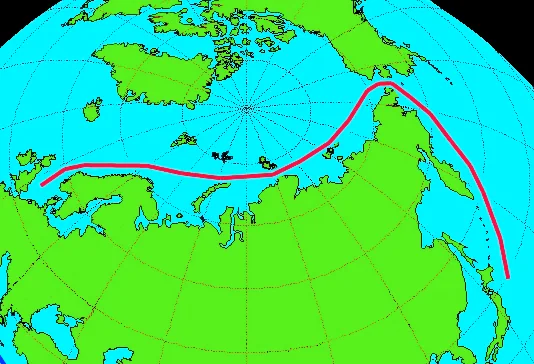
The proposed vessel will depart from Busan, transit Russia's Arctic corridor with a stop in Tromsø, continue to Rotterdam, and return to South Korea along the same route. This ambitious project forms part of South Korea's broader strategy to position itself as a future Arctic shipping hub and counterbalance China's growing dominance in polar logistics.
The initiative also includes plans to relocate the Ministry of Oceans and Fisheries to Busan and develop the southern port city into a key stopover point for Arctic-linked trade routes. This move aims to create a more efficient and sustainable supply chain, reducing reliance on traditional routes and mitigating the risks associated with maritime disruptions.
The pilot program will receive financial backing through KSA, preferential ship financing from KOBC, and reduced port fees aimed at supporting participation in the high-cost Arctic venture. These incentives demonstrate South Korea's commitment to making this project a success.
Panstar Line has not yet acquired the vessel intended for the voyage. Officials stress that the ship must have ice-class certification, capacity of around 3,000 TEU, and comply with International Maritime Organization Polar Code requirements for Arctic operations.
The estimated departure date for the voyage is uncertain due to the certification process and vessel procurement timeline. Officials predict the voyage may not depart before August, with September viewed as the most probable timeframe.
South Korea's move comes as China continues to lead Arctic container shipping activity. Chinese operators completed 14 Arctic container voyages last year, including the first direct China-Europe liner service by Sea Legend. This highlights the potential time savings compared with traditional routes via the Suez Canal.
The successful completion of this pilot project will be crucial in determining South Korea's long-term prospects as an Arctic shipping hub. As the world shifts towards more sustainable and efficient trade practices, countries like South Korea must adapt to remain competitive.
This pilot project marks a significant step towards South Korea's goal of becoming an Arctic shipping hub.