
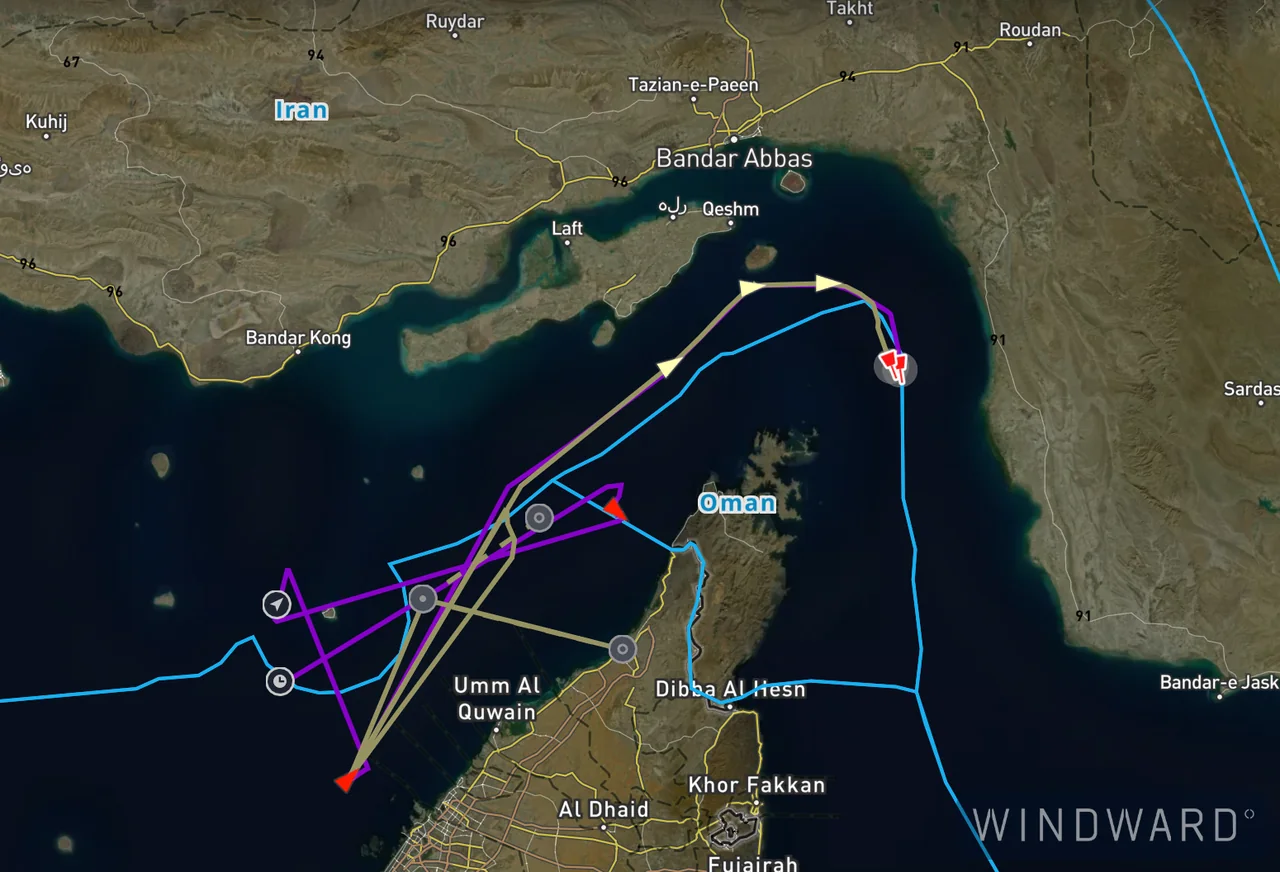
The Strait of Hormuz has become a hotbed of activity as supertankers wait to exit the Gulf, with 6 million barrels of Middle East crude on board. Three ships were crossing the strait on Wednesday, carrying oil bound for Asian markets, after waiting in the Gulf for over two months.
The U.S.-Israeli war on Iran has severely curtailed shipping through the Strait of Hormuz, which normally handles around one-fifth of the world's supply of oil and energy. The conflict has led to a significant increase in shipping traffic through alternative routes.
South Korean-flagged VLCC Universal Winner is exiting the strait following the departure of two Chinese tankers on Wednesday, bound for Ulsan, where SK Energy is located to discharge its cargo on June 9.
Shipping traffic has averaged 10 vessels going into and out of the strait in recent days, with crude oil tankers still representing a small proportion of the total volume. However, the industry is warning of high risks associated with shipping through the strait.
The Joint Maritime Information Center has noted multiple instances of aggressive hailing and assertive action by Iranian units in the last 48 hours, highlighting the need for caution among ships navigating the area.
Shipping industry associations have issued new guidance for ships looking to sail through the strait, emphasizing the risks of being attacked, drone threats, and unpredictable traffic congestion. The guidance also mentions reduced military oversight in the area.
Hundreds of vessels remain unable to transit the Strait of Hormuz, and their movement could pose a considerable navigational hazard if they were to return to normal navigation conditions. This highlights the need for careful planning and coordination among shipping companies and authorities.
The current situation is a stark reminder of the importance of maintaining stability in global energy supplies. The Strait of Hormuz remains a critical chokepoint, and its impact on international trade will continue to be closely watched in the coming weeks and months.
The Strait of Hormuz is a critical chokepoint for global energy supplies, and the current tensions are having a significant impact on the industry.